
The X-37B Spaceplane's Latest Odyssey: Paving the Way for GPS-Independent Navigation
The United States military's X-37B spaceplane, a true marvel of modern aerospace engineering, has once again embarked on a groundbreaking mission. This reusable, uncrewed winged vehicle, often shrouded in secrecy, lifted off atop a SpaceX Falcon 9 rocket from Kennedy Space Center, Florida, marking the beginning of its seventh operational flight. Codenamed OTV-7 (Orbital Test Vehicle-7) or USSF-52, this mission is poised to push the boundaries of space technology, with a particular focus on demonstrating innovative navigation capabilities independent of traditional Global Positioning System (GPS) signals. This endeavor is not merely another routine flight; it represents a significant leap forward in ensuring resilient and autonomous operations in an increasingly contested space domain.
Table of Contents
- Introduction to the X-37B's Latest Endeavor
- Unveiling the X-37B: A Marvel of Modern Aeronautics
- The OTV-7 Mission: Charting New Territories in Space
- Revolutionizing Navigation: The Quantum Inertial Sensor
- Why GPS-Independent Navigation is Crucial for National Security
- Beyond the Sensor: Exploring Other Mission Objectives and Payloads
- SpaceX and the X-37B: A Partnership for Space Dominance
- The X-37B's Enduring Legacy and Future Implications
- The Veil of Secrecy: Addressing Criticisms and Transparency
- Conclusion: The X-37B Continues to Push the Boundaries
Introduction to the X-37B's Latest Endeavor
In an era where space has become an indispensable dimension for global communication, navigation, and national security, the ability to operate independently and robustly is paramount. The launch of the X-37B spaceplane for its seventh mission underscores this critical need. This latest flight, which commenced at 11:50 pm EDT on a Thursday, is more than just another record-breaking endurance test for the United States Space Force's mysterious orbital workhorse. Its primary objective, as highlighted by military officials, is to showcase a revolutionary method for future spacecraft to navigate without the inherent reliance on GPS signals. This innovative approach leverages what the Space Force terms the "world's highest performing quantum inertial sensor ever used in space," a technology poised to redefine how we perceive and execute space missions. As nations worldwide vie for dominance in the final frontier, technologies like this ensure that the U.S. maintains a strategic advantage, guaranteeing operational continuity even in the face of potential adversaries attempting to disrupt or deny access to critical satellite services. The X-37B, therefore, remains at the forefront of space innovation, continually demonstrating its relevance and adaptability in an evolving geopolitical landscape.
Unveiling the X-37B: A Marvel of Modern Aeronautics
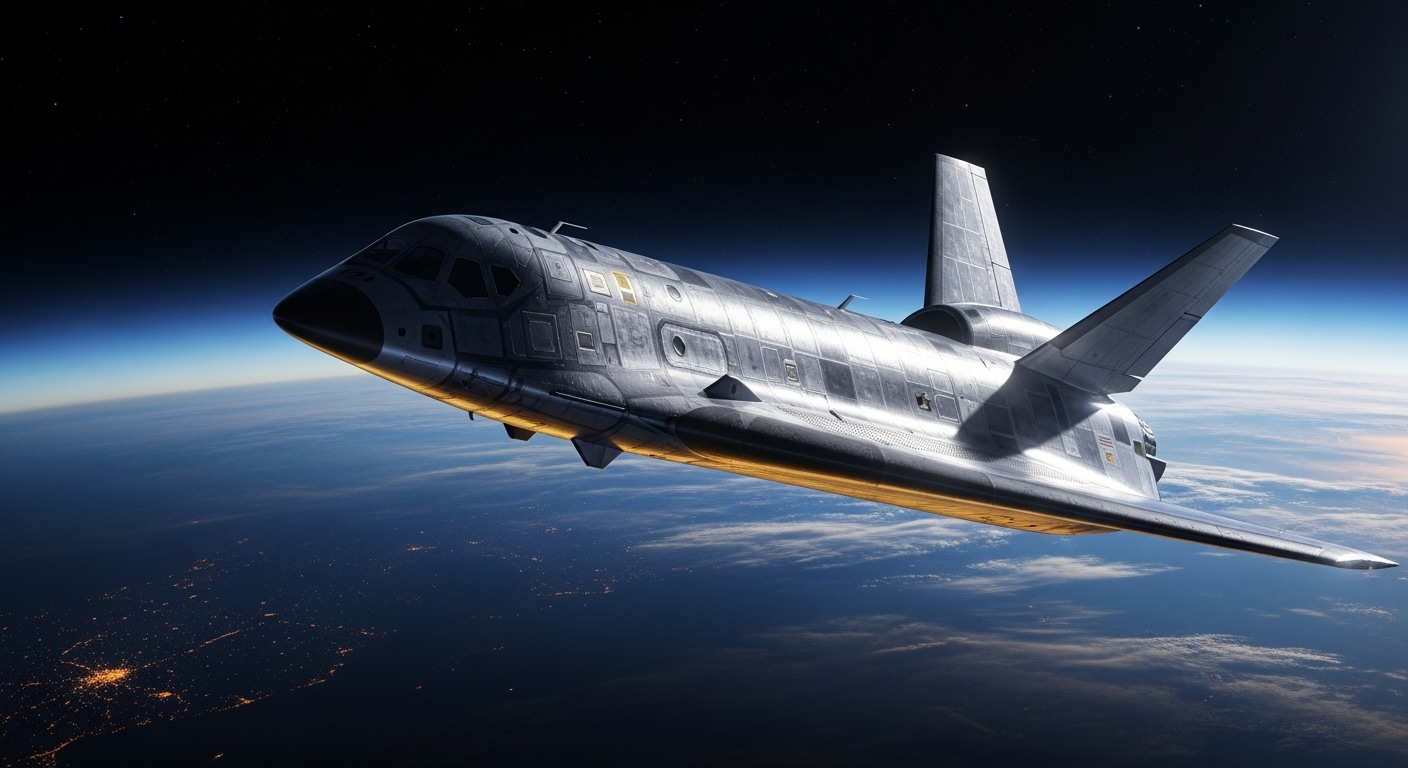
The Boeing X-37B Orbital Test Vehicle (OTV) is an uncrewed, reusable spaceplane operated by the United States Space Force. Resembling a miniature space shuttle, it measures about 29 feet (8.9 meters) in length with a wingspan of 15 feet (4.5 meters), and weighs approximately 11,000 pounds (5,000 kg). Its compact design belies its extraordinary capabilities: it can perform long-duration missions in Earth orbit, conduct various experiments, and then return to Earth, landing horizontally on a runway like an airplane. This reusability is a key factor in its cost-effectiveness and rapid turnaround for subsequent missions. Since its maiden flight in 2010, the X-37B has completed six successful missions, each breaking its own previous records for orbital endurance, with the longest mission lasting an astonishing 908 days. While much of its mission objectives remain classified, the vehicle is known to test advanced navigation, propulsion, and thermal protection systems, as well as sensors and other technologies designed for future generations of spacecraft. It acts as an orbital laboratory, providing a unique platform for on-orbit experimentation and data collection that simply cannot be replicated on Earth. Its ability to return payloads for post-mission analysis offers an invaluable advantage, allowing scientists and engineers to scrutinize the effects of the space environment on materials and technologies with unprecedented detail. This makes it an indispensable asset for advancing the nation's space capabilities and maintaining a technological edge.
The OTV-7 Mission: Charting New Territories in Space
The seventh flight of the X-37B, designated OTV-7 or USSF-52, commenced with a spectacular night launch aboard a SpaceX Falcon 9 rocket from Launch Complex 39A at Kennedy Space Center, Florida. This particular mission is notable for several reasons, not least of which is the continuation of the X-37B's impressive track record of pushing the boundaries of space endurance and technological demonstration. While specific details of its entire payload remain classified, the public announcement of the GPS-independent navigation experiment highlights a critical strategic focus. This mission aims to explore orbital regimes that have not been thoroughly investigated by the X-37B in previous flights, potentially reaching higher altitudes than ever before, which would open up new avenues for research and operational capabilities. The increased lift capacity of the Falcon Heavy, initially slated for this launch before a switch to Falcon 9, suggests the possibility of larger or more numerous payloads being carried, enabling a broader spectrum of experiments. Understanding how complex systems behave in various orbital environments is crucial for future space architecture. The data gathered from OTV-7 will undoubtedly inform the design and deployment of next-generation satellites and spacecraft, enhancing everything from communication networks to advanced reconnaissance systems. Just as enthusiasts might seek out the best technology deals to upgrade their personal computing experience, such as exploring M4 Max Mac Studio vs M1 Ultra for optimal performance, the Space Force continuously seeks the most advanced technologies to optimize its space fleet, and the X-37B is a prime example of this pursuit.
Revolutionizing Navigation: The Quantum Inertial Sensor
At the heart of the OTV-7 mission's most publicized experiment is the deployment of the "world's highest performing quantum inertial sensor ever used in space." This groundbreaking technology represents a significant departure from traditional navigation methods. Inertial navigation systems (INS) rely on gyroscopes and accelerometers to track movement and orientation relative to a known starting point, but these systems accumulate error over time. GPS, while incredibly accurate, depends on signals from a constellation of satellites, which can be jammed, spoofed, or otherwise disrupted by adversaries or natural phenomena. A quantum inertial sensor, however, harnesses the principles of quantum mechanics, such as atomic interferometry, to achieve unprecedented levels of precision and stability. By measuring changes in the quantum states of atoms, these sensors can detect minute accelerations and rotations with extreme accuracy, making them far less susceptible to drift than conventional inertial sensors. This allows a spacecraft to determine its position, velocity, and orientation over long periods without needing external references like GPS signals. The implications are profound: it offers a robust, autonomous navigation solution that enhances resilience against electronic warfare threats and ensures mission success even in denied or degraded environments. This technology could also be vital for deep-space missions where GPS signals are unavailable, paving the way for more ambitious exploration. For more detailed insights into quantum sensing, you can refer to resources from organizations like NIST (National Institute of Standards and Technology), which is at the forefront of quantum research.
Why GPS-Independent Navigation is Crucial for National Security
The emphasis on GPS-independent navigation is not merely a technological flex; it's a strategic imperative for national security. In today's interconnected world, nearly every aspect of modern life, from transportation and finance to communication and military operations, relies heavily on GPS. This widespread dependence, however, creates a single point of failure. Adversarial nations are increasingly developing and deploying capabilities to disrupt, jam, or spoof GPS signals, posing a severe threat to critical infrastructure and military effectiveness. Imagine a scenario where GPS signals are compromised: commercial airlines could struggle with navigation, emergency services might face delays, and military precision-guided munitions could become ineffective. By developing and deploying quantum inertial sensors and other autonomous navigation systems, the US military aims to create redundant and resilient positioning, navigation, and timing (PNT) capabilities. This ensures that even if GPS becomes unavailable or unreliable, critical missions can continue without interruption. It provides a strategic hedge, guaranteeing operational continuity and maintaining a decisive edge in potential conflicts. This technological advancement fortifies the nation's space assets against emerging threats and ensures the uninterrupted flow of essential services, safeguarding both national interests and global stability. Just as robust charging solutions are essential for modern portable devices, like the innovative features of the Belkin UltraCharge Pro 3-in-1 Travel Charger, resilient navigation is fundamental for reliable space operations.
Beyond the Sensor: Exploring Other Mission Objectives and Payloads
While the quantum inertial sensor is the highlight, it's important to remember that the X-37B typically carries multiple payloads and undertakes a variety of classified and unclassified experiments. Past missions have been known to test advanced materials' durability in the harsh space environment, evaluate new propulsion technologies, and deploy small satellites. The X-37B's unique ability to return experiments to Earth for detailed post-flight analysis provides invaluable data that cannot be obtained from traditional satellite missions. This "return to lab" capability allows for precise measurements of how components degrade, how new technologies perform, and how biological samples react to microgravity and radiation. This mission could also be testing advanced reconnaissance technologies, new communication systems, or even concepts for in-orbit servicing and refueling. These experiments contribute to the overall resilience and technological superiority of the U.S. Space Force's assets. The secrecy surrounding many of these payloads is standard practice for military space programs, aiming to protect sensitive technologies and operational advantages. However, the outcomes of these experiments invariably feed into broader space development, benefiting both military and civilian applications in the long run. For those interested in cutting-edge technology that brings complex systems to life, it's worth noting how high-performance computing, often seen in the context of OWC Docks for Mac users, plays a crucial role in managing and analyzing the vast amounts of data generated by such sophisticated space missions.
SpaceX and the X-37B: A Partnership for Space Dominance
The partnership between the United States military and SpaceX has been instrumental in the continued success and evolution of the X-37B program. This latest launch aboard a Falcon 9 rocket from SpaceX marks another milestone in this collaboration. SpaceX's Falcon 9, renowned for its reliability and cost-effectiveness through reusability, provides the powerful and efficient lift capability needed to send the X-37B into orbit. This collaboration highlights a broader trend of government agencies increasingly relying on private commercial space companies for launch services, fostering innovation and driving down costs. SpaceX's track record of successful launches and its rapid turnaround capabilities are significant advantages for national security missions that often require flexibility and timely access to space. The ability to launch crucial payloads like the X-37B on demand, without extensive delays, is a strategic asset. Furthermore, the robust performance of rockets like the Falcon 9 allows for a broader range of mission profiles, including potentially higher orbital altitudes or the deployment of more substantial payloads, expanding the X-37B's experimental capacity. This synergy between government requirements and commercial capabilities is a testament to the evolving landscape of space exploration and defense, ensuring that cutting-edge technology can be delivered to orbit efficiently and reliably. You can learn more about SpaceX's mission and launches on their official website, SpaceX.com.
The X-37B's Enduring Legacy and Future Implications
With each successive mission, the X-37B continues to cement its legacy as one of the most remarkable and mysterious spacecraft ever developed. Its ability to perform extended missions, demonstrate advanced technologies, and return to Earth for analysis provides an unparalleled platform for pushing the boundaries of space capabilities. The vehicle's enduring relevance lies in its adaptability and its role as a testbed for future space systems. The quantum inertial sensor experiment on OTV-7 is just one example of how the X-37B is actively shaping the future of space operations, from enhancing navigation resilience to exploring novel propulsion methods and advanced sensor technologies. The data gathered from these missions will inform the design of future reconnaissance satellites, communication constellations, and even crewed spacecraft, ensuring safer and more efficient space travel. As the global space race intensifies, the X-37B's contributions to maintaining technological superiority are invaluable. It represents a continuous investment in innovation, a commitment to exploring the unknown, and a strategic asset for safeguarding national interests in the final frontier. The lessons learned from the X-37B's flights will resonate for decades, influencing everything from deep-space exploration to the development of autonomous systems, much like how advanced aerial vehicles, such as those found in Prime Day Drone Deals, continue to evolve and inspire future flight technologies.
The Veil of Secrecy: Addressing Criticisms and Transparency
Despite its technological prowess, the X-37B program has consistently drawn criticism due to the high level of secrecy surrounding its missions. While the Space Force occasionally discloses specific experiments, like the quantum inertial sensor on OTV-7, the vast majority of its activities and payloads remain classified. Critics argue that this lack of transparency fuels speculation about the weaponization of space, creating mistrust among international partners and potentially escalating tensions in the orbital domain. Concerns are often raised about the X-37B's potential role in surveillance, satellite inspection, or even as a platform for deploying offensive capabilities, though U.S. officials have repeatedly denied such claims, stating its purpose is purely experimental and defensive. The Space Force maintains that secrecy is necessary to protect sensitive technologies and operational methodologies from potential adversaries, ensuring a strategic advantage. Balancing national security interests with calls for greater transparency remains a persistent challenge for programs like the X-37B. However, the limited disclosures, such as the GPS-independent navigation experiment, are attempts to shed some light on the program's objectives, demonstrating its commitment to advancing peaceful, yet robust, space capabilities. Discussions about transparency in space are ongoing and involve various international bodies and experts. For more perspectives on space policy and security, reliable sources like the Center for Strategic and International Studies (CSIS) Aerospace Security Project offer valuable insights.
Conclusion: The X-37B Continues to Push the Boundaries
The launch of the X-37B for its seventh mission marks yet another significant chapter in the ongoing saga of this remarkable spaceplane. Far from being an outdated relic, it remains a highly relevant and forward-looking asset for the United States Space Force. This latest endeavor, with its explicit focus on developing GPS-independent navigation capabilities through a revolutionary quantum inertial sensor, underscores a proactive approach to securing critical space assets against emerging threats. The X-37B's enduring ability to conduct long-duration, highly adaptable missions, test cutting-edge technologies, and return valuable payloads to Earth ensures that the U.S. maintains a robust and resilient presence in space. As the global competition in the space domain intensifies, the X-37B continues to be at the vanguard, pushing the boundaries of what is possible and shaping the future of space exploration, defense, and technology. Its silent flights and often-secretive experiments are, in fact, laying the groundwork for a more autonomous, secure, and advanced future in the cosmos.


