
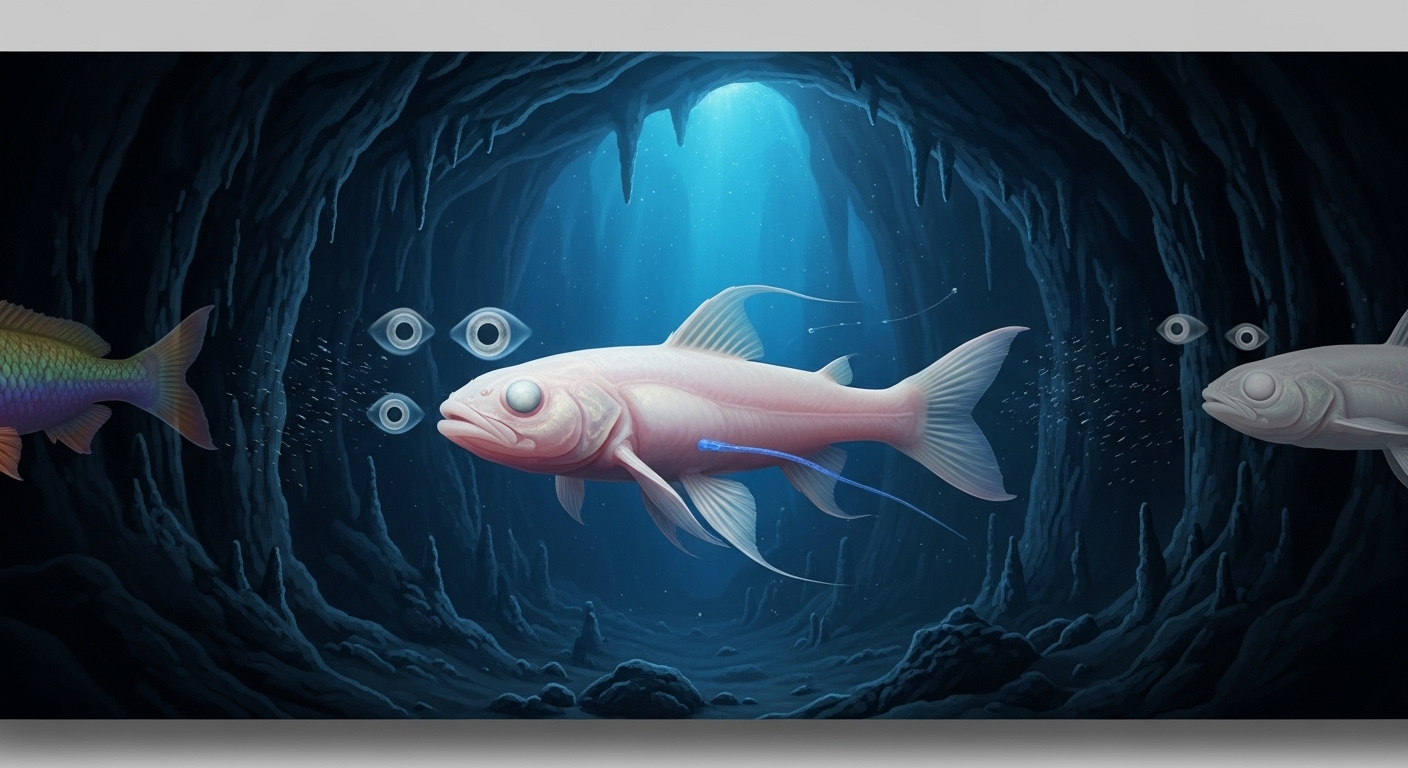
The Blind Wonders of the Deep: How Cavefish Redefined Adaptation
The dark, silent world beneath our feet holds some of the most extraordinary examples of evolution in action. Among them, the unassuming cavefish stands out as a living testament to nature's relentless drive to adapt. For generations, scientists have been captivated by a singular, striking feature: their profound lack of eyes. Time and again, across countless independent populations, whenever a fish found itself swept into a lightless cave and survived long enough for natural selection to weave its magic, the eyes disappeared. It's a phenomenon so consistent, so universal among troglodytes (cave-dwelling animals), that it has become a textbook case of convergent evolution.
Yet, the story of the cavefish is far more profound than simply what they have lost. As geneticist Jaya Krishnan of the Oklahoma Medical Research Foundation eloquently puts it, "But it's not that everything has been lost in cavefish. Many enhancements have also happened." This shift in perspective marks a new era in cavefish research, moving beyond the fascination with their blindness to explore the remarkable adaptations that have allowed them not just to survive, but to thrive in environments utterly hostile to sighted life. These "enhancements" — a suite of heightened senses and metabolic changes — are not just biological marvels; they may also hold invaluable clues to understanding and potentially treating human conditions such as obesity and diabetes. The subterranean world, it turns out, is a living laboratory offering insights far beyond its dark confines.
Table of Contents
- The Repeated Enigma: Why Did the Eyes Disappear?
- Beyond Vision: A Symphony of Enhanced Senses
- Metabolic Masterminds: Clues for Human Health
- The Genetic Blueprint of Adaptation
- Life in the Dark: Broader Ecological and Evolutionary Insights
- Future Directions: Unlocking Cavefish Secrets
- Conclusion: A Testament to Evolution's Power
The Repeated Enigma: Why Did the Eyes Disappear?
For decades, the repeated loss of eyes in cavefish has fueled intense scientific debate. Why would an organ as complex and vital as the eye simply vanish? Initially, some biologists proposed the "neutral mutation" hypothesis, suggesting that in the absence of light, eyes became functionally useless. Without selective pressure to maintain perfect vision, random mutations that impaired eye development would accumulate over generations, leading to their gradual atrophy. In a dark cave, a fish with faulty eyes would suffer no disadvantage compared to a sighted one, so there would be no force of natural selection to purge these "bad" mutations.
However, a more compelling explanation has gained significant traction in recent years, largely due to the work of evolutionary physiologists like Nicolas Rohner of the University of Münster. As Rohner states, "Eyes are very expensive in terms of resources and energy. Most people now agree that there must be some advantage to losing them if you don't need them." This "energetic cost" hypothesis posits that maintaining and developing eyes consumes a substantial amount of an organism's precious metabolic resources. In the perpetually resource-scarce environment of a cave, every calorie counts. By shedding a metabolically demanding organ like the eye, cavefish could reallocate that energy to other, more pressing needs, such as growth, reproduction, or the development of alternative sensory systems. This would confer a significant survival advantage, actively driving the loss of eyes through natural selection rather than mere genetic drift.
Consider the energy expenditure: building and maintaining the retina, the optic nerve, and the complex neural pathways for visual processing requires a constant supply of energy. In an ecosystem where food can be scarce and unpredictable, any mechanism that reduces energy consumption offers a competitive edge. This efficient resource allocation is a fundamental principle in biology, much like how modern technology strives for multi-functionality and efficiency, with devices like the iPhone 17 Pro potentially gaining reverse wireless charging to optimize power use. For cavefish, losing their eyes was an ultimate form of metabolic streamlining, a powerful evolutionary trade-off that allowed them to redirect vital resources to adaptations better suited for their unique habitat.
Beyond Vision: A Symphony of Enhanced Senses
The story of cavefish isn't just about loss; it's profoundly about gain. In the absence of sight, evolution has sculpted an array of remarkably sophisticated non-visual senses, transforming these fish into masters of their dark domain. These "enhancements" allow them to navigate, forage, and interact with their environment with astonishing precision.
The Lateral Line System: Navigating by Water Currents
Perhaps the most prominent of these adaptations is the dramatically enhanced lateral line system. This sensory organ, present in most fish, detects vibrations and pressure changes in the water. In cavefish, this system is significantly hypertrophied, featuring more numerous and larger neuromasts (sensory cells) often housed in prominent pits or canals on their heads and bodies. This allows them to create a detailed 'map' of their surroundings based on subtle water movements. They can detect obstacles, the presence of predators, and even the faint ripples created by prey, effectively 'seeing' their world through touch at a distance. The remarkable integration of new senses in cavefish, allowing them to navigate and thrive, mirrors efforts in technology to create seamless experiences, such as when Microsoft Connects Android Apps to Windows 11 for a 'resume anywhere' experience, enabling users to transition effortlessly between devices.
Chemoreception and Olfaction: A World of Smells and Tastes
With no light to guide them, chemical cues become paramount. Cavefish possess a heightened sense of smell (olfaction) and taste (chemoreception), allowing them to detect minute concentrations of chemicals in the water. This enables them to locate sparse food sources, identify potential mates, and even recognize their own territories or group members. Their expanded nasal cavities and increased number of taste buds on their skin and fins are direct physiological manifestations of this adaptation. In the dark, silent world of the cave, losing sight creates a massive sensory void. Evolution filled this void with advanced non-visual senses, much like how communication tools like WhatsApp addressed the gap of missed calls with voicemail functionality, providing an alternative way to convey information.
Tactile Senses and Mechanoreception
Beyond the lateral line, cavefish often exhibit increased tactile sensitivity across their skin, sometimes accompanied by longer barbels (whisker-like appendages) or fin rays that act as feelers. These specialized structures enhance their ability to explore their immediate environment through direct physical contact. The cumulative effect of these sensory enhancements is a creature exquisitely attuned to its surroundings, painting a rich, detailed picture of the cave world using vibrations, smells, and touch, where sighted fish would simply be lost.
Metabolic Masterminds: Clues for Human Health
Perhaps the most unexpected and potentially revolutionary discoveries about cavefish relate to their unique metabolism. Living in an environment characterized by unpredictable food availability – periods of feasting followed by long stretches of famine – cavefish have evolved extraordinary metabolic strategies. They are remarkably efficient at storing fat, accumulating significantly more adipose tissue than their surface-dwelling relatives. What's truly intriguing is that despite this high fat storage, they do not suffer from the negative health consequences typically associated with obesity in humans, such as insulin resistance, diabetes, or cardiovascular issues.
This paradoxical resilience has captured the attention of biomedical researchers. Scientists have found that cavefish exhibit alterations in genes associated with metabolism, insulin signaling, and fat regulation. For instance, specific genetic mutations allow them to maintain high levels of fat storage without developing the severe insulin resistance that is a hallmark of Type 2 diabetes in humans. This suggests that their bodies have found a way to decouple fat accumulation from metabolic dysfunction.
The implications for human health are profound. If researchers can pinpoint the exact genetic and molecular mechanisms that allow cavefish to be "fat but fit," it could unlock new avenues for treating human obesity and diabetes. This line of inquiry resonates strongly with other complex health mysteries, such as when Two Modern Illnesses Uncover Shocking Link to Deadly 1980s Disease, demonstrating how seemingly disparate biological phenomena can be interconnected and reveal crucial insights. Understanding these natural adaptations could lead to novel therapies that allow humans to better manage their weight and blood sugar, potentially mitigating the global health crisis posed by metabolic diseases. The concept of resource optimization is paramount in both the natural world and human commerce. While consumers seek massive Apple savings on tech gadgets, cavefish achieved their 'savings' by shedding metabolically expensive eyes and optimizing energy use.
The Genetic Blueprint of Adaptation
Unraveling the molecular intricacies behind these astonishing adaptations requires cutting-edge genetic research. Scientists are employing advanced genomic sequencing and gene-editing technologies like CRISPR to identify the specific genes responsible for eye loss, sensory enhancement, and metabolic shifts in cavefish. By comparing the genomes of cave-dwelling populations with their surface-dwelling counterparts, researchers can pinpoint the mutations that occurred and infer their evolutionary significance.
For example, studies have identified specific gene pathways involved in eye development, such as the Sonic hedgehog (Shh) pathway, which is often overactive in cavefish embryos, leading to eye degeneration. Concurrently, genes related to the development of the lateral line system and olfaction are found to be upregulated. Similarly, research is focusing on genes involved in lipid metabolism, glucose regulation, and insulin sensitivity, comparing their expression levels and variants between cave and surface fish. The sheer volume of genetic data generated requires immense computational power and sophisticated analytical tools. This is where the advancements in artificial intelligence and powerful computing, exemplified by collaborations like Nvidia & RealSense Partnering to Unleash Advanced Physical AI, become indispensable for processing and interpreting complex biological datasets, accelerating the pace of discovery. Just as nations make strategic investments in vital technologies, as seen in Trump's vision for the US government buying Intel for American chip revival, evolution makes 'investments' by favoring traits that provide survival advantages.
Beyond identifying specific genes, scientists are also investigating epigenetic modifications – changes in gene expression that don't involve altering the DNA sequence itself. These epigenetic tags can be influenced by environmental factors and may play a role in how cavefish rapidly adapt to their dark, resource-limited habitats. Understanding the mechanisms that drive these dramatic evolutionary shifts can be as revealing as understanding how phishing made easy with off-the-shelf tools can exploit system vulnerabilities; both highlight the power of targeted, efficient processes within complex systems.
Life in the Dark: Broader Ecological and Evolutionary Insights
Cave ecosystems serve as unparalleled natural laboratories for evolutionary biology. Their isolation, consistent environmental conditions (darkness, stable temperature, high humidity), and unique resource limitations place intense selective pressures on their inhabitants. This results in accelerated and often convergent evolution, where different species or populations independently develop similar traits to cope with the same environmental challenges. The repeated loss of eyes and the gain of enhanced non-visual senses in various cavefish species across different continents is a prime example of this phenomenon.
Studying cavefish offers insights into fundamental questions of evolution: How quickly can species adapt to radical environmental changes? What are the genetic trade-offs involved in losing one trait while gaining another? How does resource availability shape metabolic strategies? The exploration of extreme and unknown environments, from the depths of Earth's caves to the reaches of space by vehicles like the US Military's X-37B Spaceplane on a classified mission, consistently uncovers astonishing adaptations and biological mysteries, pushing the boundaries of our understanding of life's resilience. The subterranean world presents its own set of vulnerabilities and challenges, albeit of a biological nature, mirroring how systems can be exposed to risks, as highlighted by the FBI's warning about Russia exploiting a Cisco vulnerability.
Beyond the biological implications, the study of cave ecosystems underscores the importance of biodiversity and conservation. These unique habitats are fragile and often threatened by human activities, including pollution, groundwater depletion, and habitat destruction. Protecting cavefish and their environments is crucial, not only for preserving unique evolutionary lineages but also for safeguarding a living archive of adaptation that may hold keys to future scientific breakthroughs. The intricate process of evolutionary adaptation, while complex, results in organisms that perform critical survival tasks with apparent ease, much like how effortless video editing with Google Drive simplifies a previously complex task for users, making complex systems manageable.
Future Directions: Unlocking Cavefish Secrets
The ongoing research into cavefish promises to continue yielding fascinating discoveries. Scientists are increasingly using these organisms as model systems to study a wide range of biological phenomena, from neurodevelopment and sensory biology to endocrinology and metabolic health. Future directions include:
- Pharmacological Interventions: Identifying specific molecules or pathways in cavefish that confer metabolic resilience could lead to the development of new drugs for human metabolic disorders.
- Gene Therapy Targets: Understanding the genetic basis of their adaptations could inform potential gene therapy strategies to address issues like obesity or diabetes by modulating specific genes.
- Neurobiology of Adaptation: Further exploring how the brain reorganizes itself in the absence of visual input, and how other sensory areas are enhanced, offers insights into brain plasticity and development.
- Evo-Devo (Evolutionary Developmental Biology): Delving deeper into the developmental processes that lead to eye loss and sensory gain, understanding how small changes during embryonic development can lead to profound adult phenotypes.
The rapid pace of technological innovation, for instance, the discussions surrounding AI Chatbots and Big Tech's Reckless Speed, highlights how systems adapt or face consequences. Similarly, cavefish adapted to a radical environment, shedding costly features. Evolutionary solutions often prioritize efficiency and compactness, much like the design philosophy behind products such as the Belkin UltraCharge Pro 3-in-1 Travel Charger, which aims for maximum power with minimal clutter. The ongoing process of scientific discovery is akin to the release of new software versions, each bringing improvements and new features, such as the arrival of Kodi 22 'Piers', marking a new phase in understanding complex systems and bringing new capabilities to the forefront of research.
The cavefish reminds us that even in the most extreme environments, life finds a way, not just through perseverance but through ingenious evolutionary innovation. To learn more about how nature pushes boundaries, explore external resources like National Geographic's insights on cave animals or delve into the specifics of metabolic research at NIH.
Conclusion: A Testament to Evolution's Power
The cavefish, seemingly disadvantaged by its blindness, stands as a profound symbol of life's incredible capacity for adaptation. Its story is not one of simple loss, but of a dynamic evolutionary tango: shedding expensive eyes in favor of heightened non-visual senses and developing a unique metabolism that allows it to flourish where others would perish. The relentless hand of natural selection, operating in the challenging confines of subterranean ecosystems, has sculpted an organism perfectly suited to its niche.
From the convergent evolution of eye loss across disparate populations to the metabolic secrets that could unlock new treatments for human diseases, cavefish offer a continuous stream of scientific wonder. They remind us that the most valuable lessons about life, resilience, and biological innovation often come from the most unexpected corners of our world. As researchers continue to probe the genetic and physiological mysteries of these blind wonders, the cavefish will undoubtedly continue to illuminate our understanding of evolution's enduring power and its potential to benefit humanity.


